
Connecting your Google Play Developer account lets SiteTo.App prepare and publish your Android build in the Play Console account owned by your business. You stay in control of the account, the store listing, and every release.
Before you begin
You will need:
- An active Google Play Developer account
- Owner or administrator access to that Play Console account
- A Google Cloud project you can manage, or permission to create one
- Your app set up in SiteTo.App
You will create a service account and download one JSON key file. Treat that file like a password: do not email it, share it in chat, or save it in a public folder.
1. Create or select a Google Cloud project
- Open the Google Cloud Console.
- Sign in with the Google account you use to manage your business.
- Select an existing project dedicated to your mobile app, or choose New project.
- Give the project a clear name, such as SiteTo.App publishing, and select Create.
- Make sure the new project is selected before continuing.
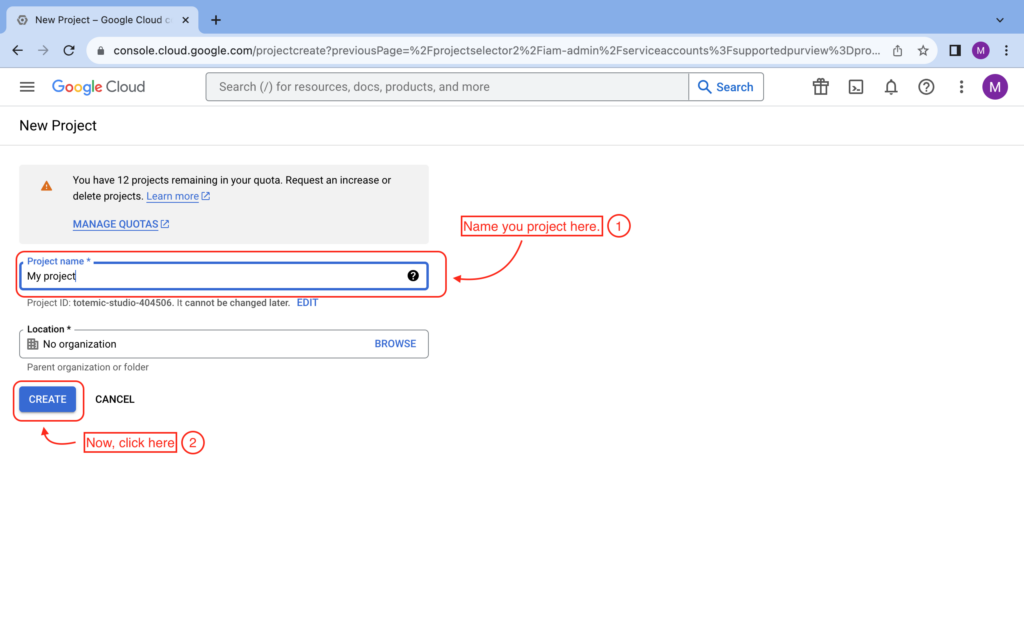
You do not need to grant the service account an Owner role in Google Cloud. Google Play permissions are assigned separately in Play Console.
2. Enable the Google Play Android Developer API
- Open the Google Play Android Developer API in Google Cloud Console.
- Confirm that the correct Cloud project appears in the project selector.
- Select Enable.
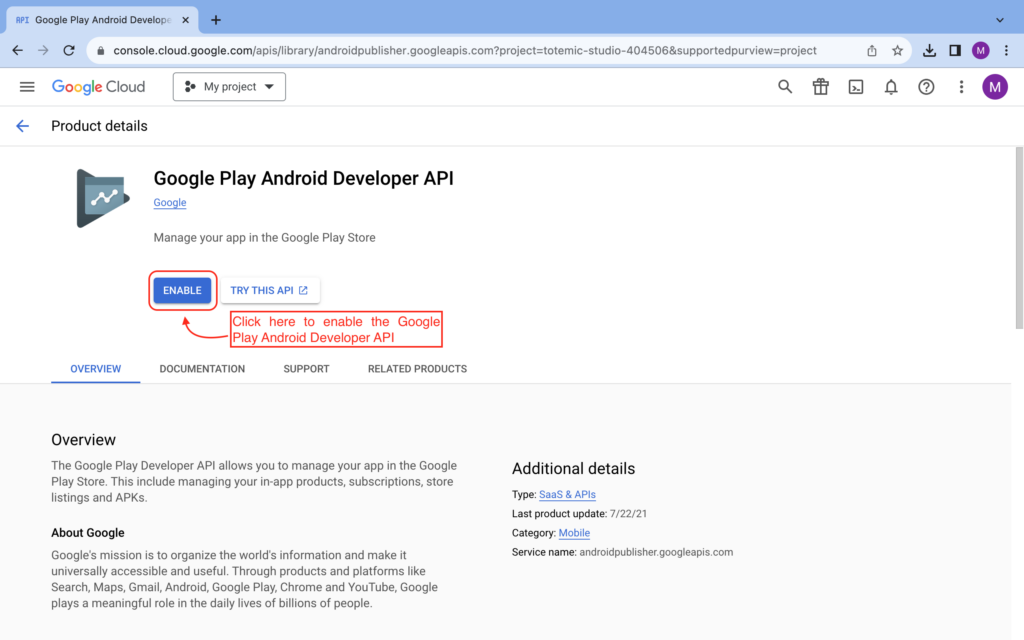
If the page shows Manage instead, the API is already enabled and you can continue.
3. Create a service account
- Open Service accounts in Google Cloud Console.
- Select Create service account.
- Enter a descriptive name, such as SiteTo.App Google Play publishing.
- Select Create and continue.
- Skip the optional Cloud project roles and user-access steps, then select Done.
- Copy the service account email. It ends in
iam.gserviceaccount.comand you will invite it to Play Console in step 5.
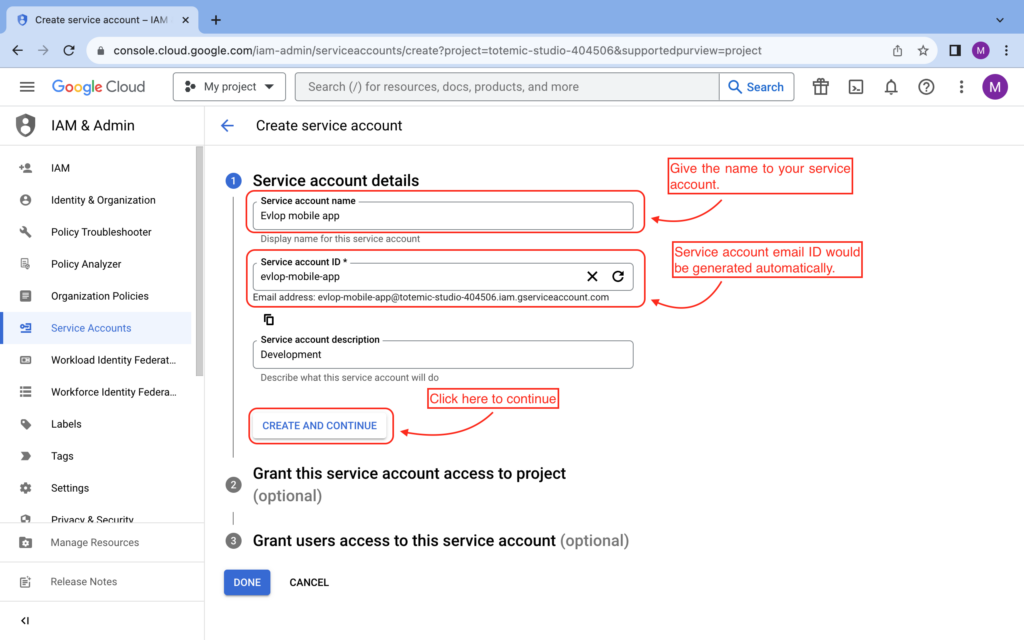
The service account is a separate identity used only for secure server-to-server access. It is not your personal Google login.
4. Download the JSON key
- On the Service accounts page, select the service account you just created.
- Open the Keys tab.
- Select Add key, then Create new key.
- Choose JSON and select Create.
- Save the downloaded file somewhere private. Google will not let you download the same private key again.
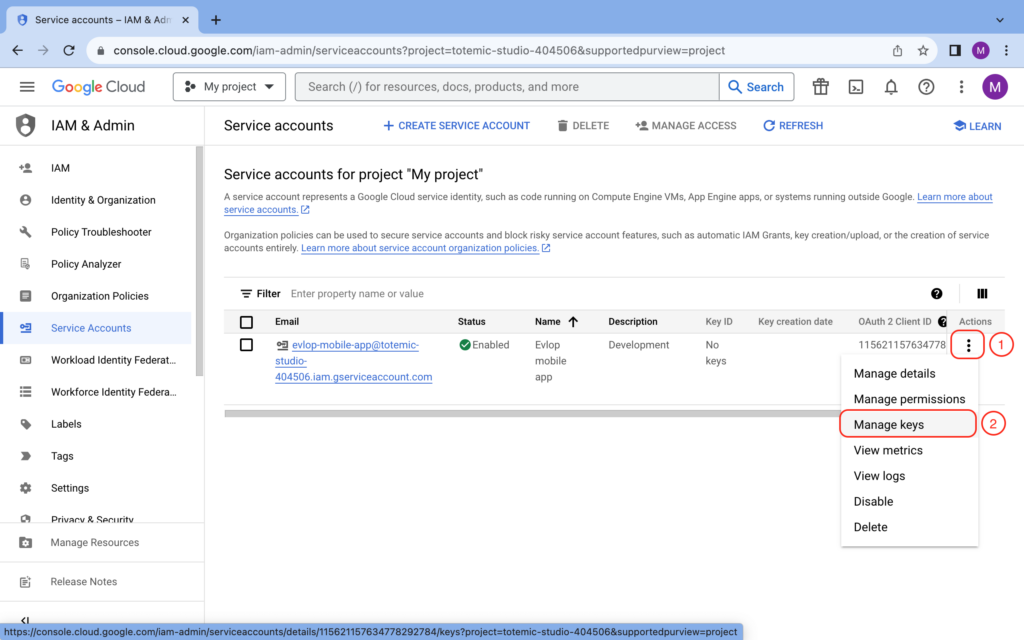
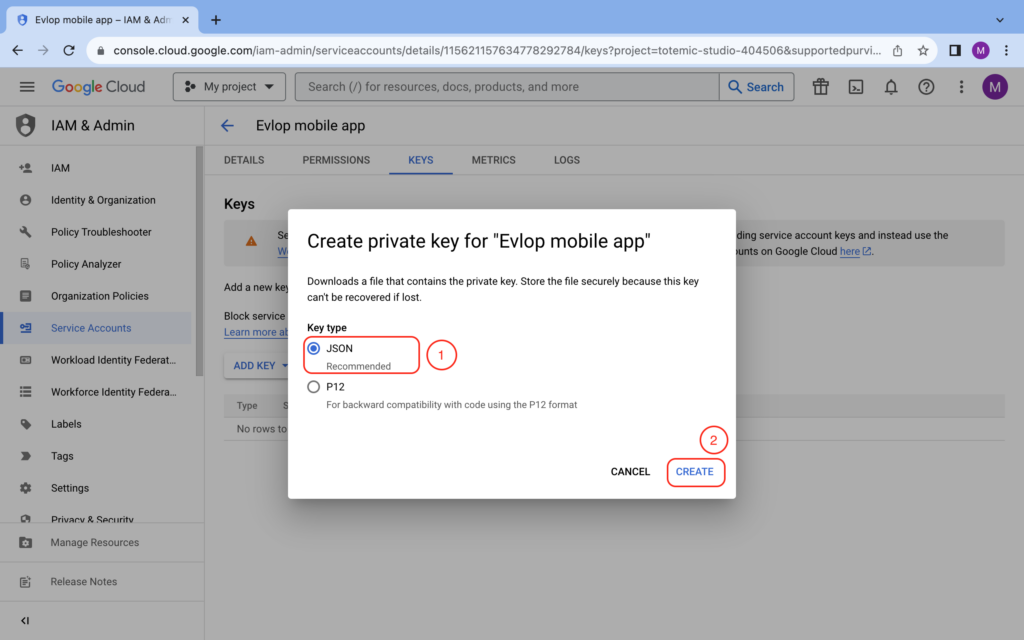
Do not rename the file to a different extension or edit its contents. SiteTo.App expects the original JSON file.
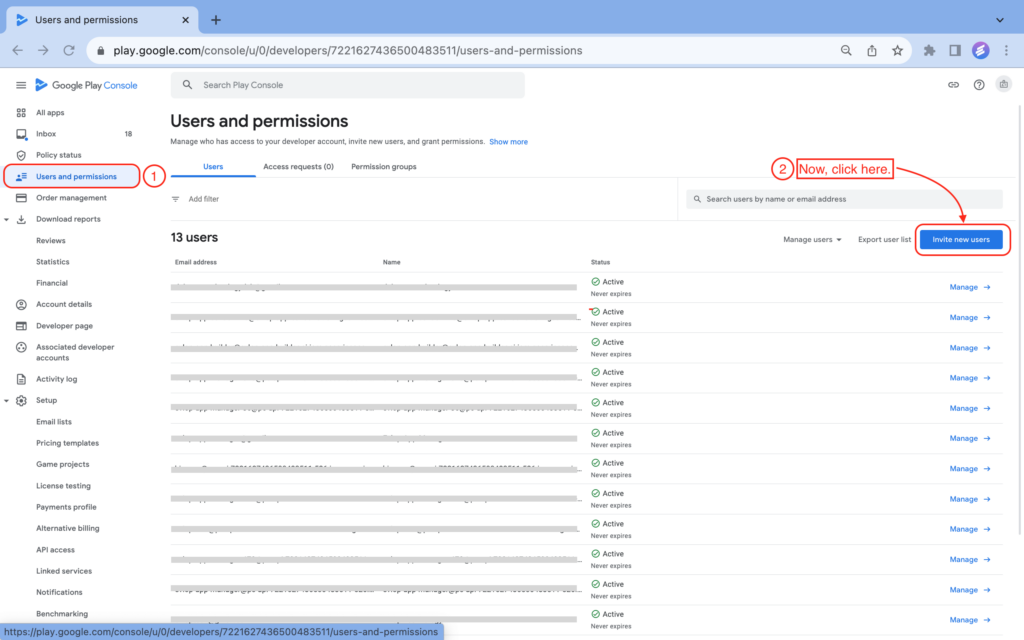
5. Give the service account access in Play Console
- Open Users and permissions in Google Play Console.
- Select Invite new users.
- Paste the service account email you copied in step 3.
- Give it access to the Android app you want SiteTo.App to publish.
- Grant the permissions needed for the publishing work:
- View app information (read-only)
- Release apps to testing tracks
- Release to production, exclude devices, and use Play App Signing
- Manage store presence if SiteTo.App will help update the store listing
If the app has not been created in Play Console yet, also grant the account-level permission Create, edit, and delete draft apps. Do not grant financial, order, subscription, user-management, or full administrator permissions unless your publishing arrangement specifically requires them.
Select Invite user to finish. Google may take a minute or two to apply new access.
6. Connect Google Play in SiteTo.App
- Sign in to SiteTo.App.
- Open the app you want to publish.
- In the app editor, find Connect and choose Google Play. You can also use Connect Google Play in the app checklist.
- In Developer account email, enter the Google email address that owns or administers your Play Console account. Do not enter the service account email here.
- Under Service account key (JSON), upload the JSON file from step 4.
- Select Save.
The Google Play card will show Connected when the credentials have been saved. SiteTo.App can now use the permitted Play Console access for this app's Android publishing work.
What happens next
Finish your app icon, splash screen, navigation, and other app details in SiteTo.App. When you are ready, choose an Android publishing plan and start the build. Google still reviews every release, so connecting the account does not publish the app immediately or guarantee approval.
Keep the service account and its Play Console access active while your app is being built or submitted. If you disconnect the account or delete the key, SiteTo.App will no longer be able to use that connection.
Troubleshooting
SiteTo.App says the JSON file is invalid
Make sure you uploaded the unedited .json key downloaded from the service account's Keys tab. A project configuration file, OAuth client file, or Firebase configuration file will not work.
The account connects, but publishing returns a permissions error
Open Users and permissions in Play Console, select the service account, and confirm that it has access to the correct app plus the release permissions listed in step 5. New permissions can take a few minutes to become active.
You cannot create a service account key
Your Google Workspace or Cloud organization may block user-managed service account keys. Ask your Cloud administrator to create an approved JSON key or allow key creation for this service account.
The service account is connected to the wrong app
In SiteTo.App, open the affected app, choose Connect → Google Play, and select Disconnect. Then adjust the service account's app access in Play Console and reconnect it to the correct SiteTo.App project.
Keep the connection secure
- Store the JSON key in a secure password or secrets manager.
- Never commit the key to a code repository or upload it to cloud storage with public access.
- Give the service account access only to the app and publishing actions it needs.
- Remove old keys from Google Cloud after replacing them in SiteTo.App.
- Review service-account access in Play Console after your publishing work is complete.
For Google's latest setup details, see the official Google Play Developer API guide, Play Console permissions guide, and service account key guide.
The Google Console screenshots in this guide were selected from the Evlop setup article supplied as a visual reference. Google may update labels or page layouts over time.