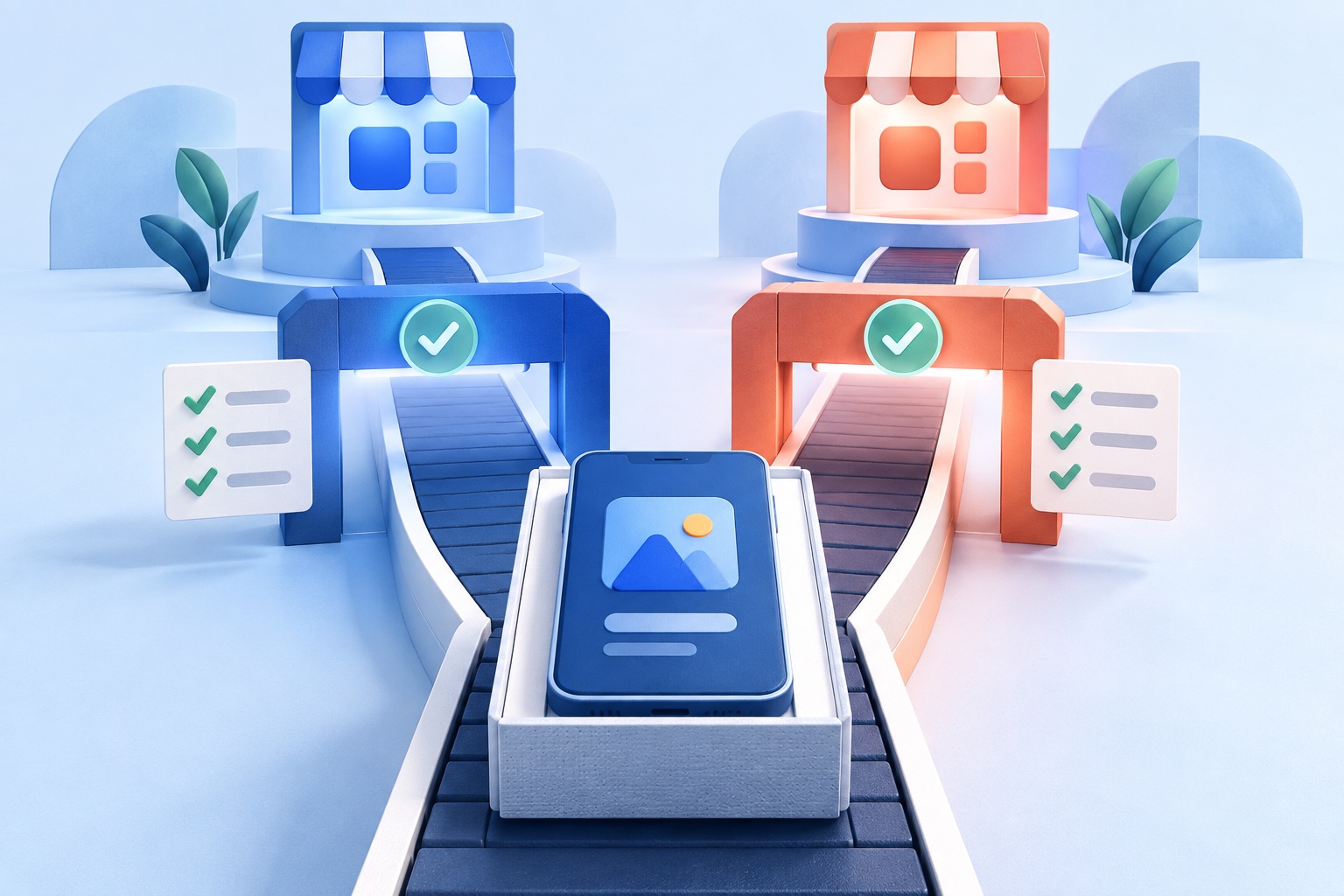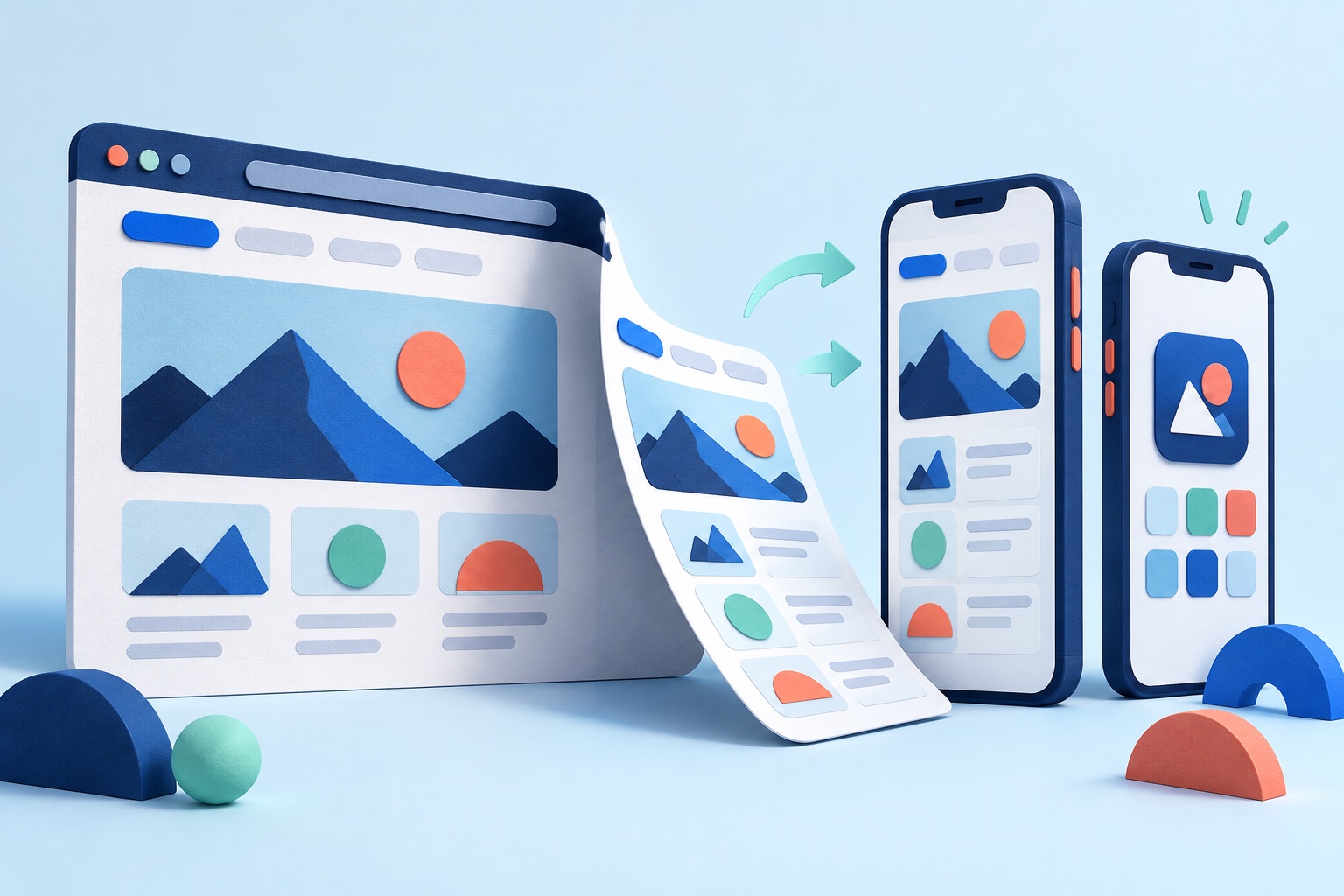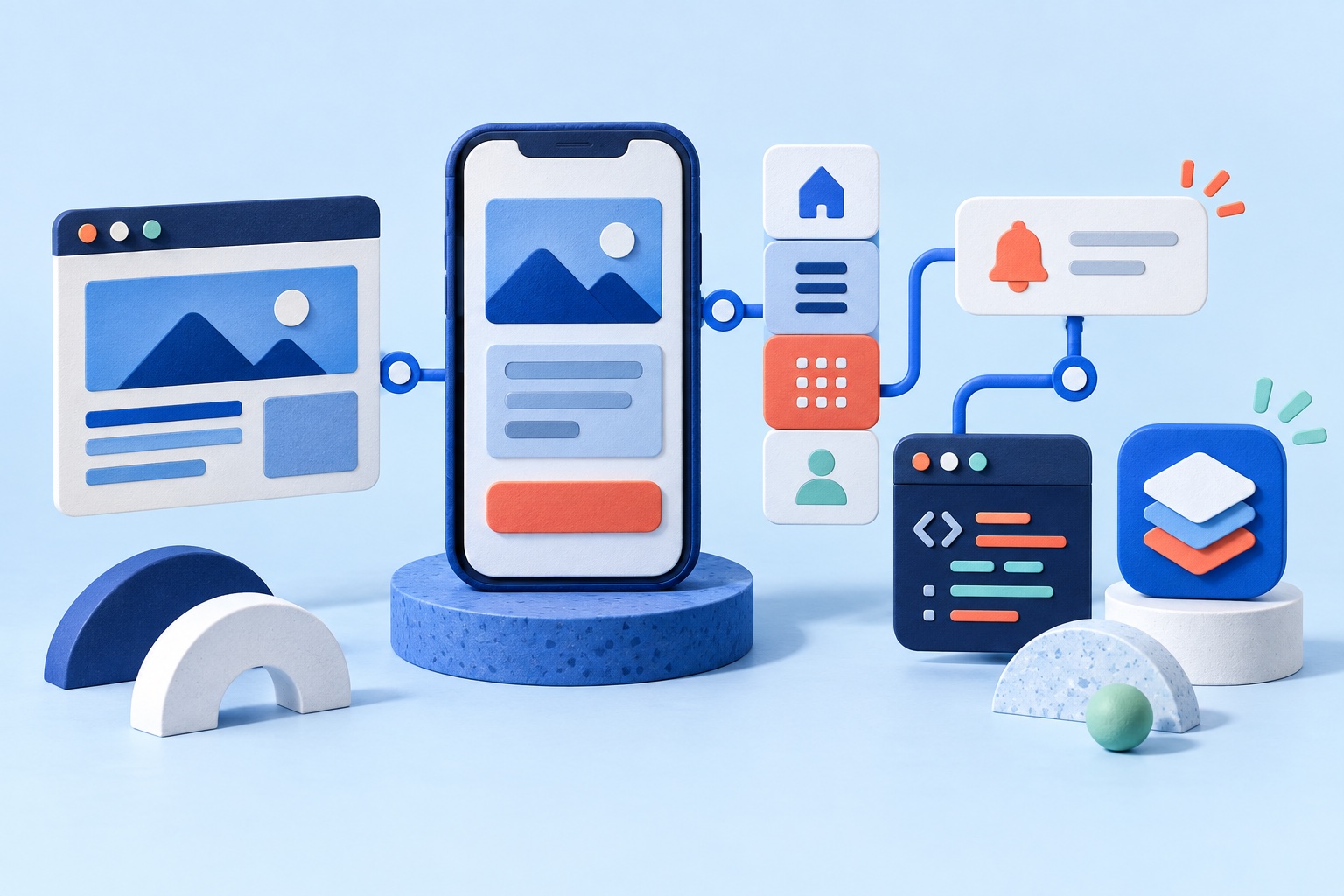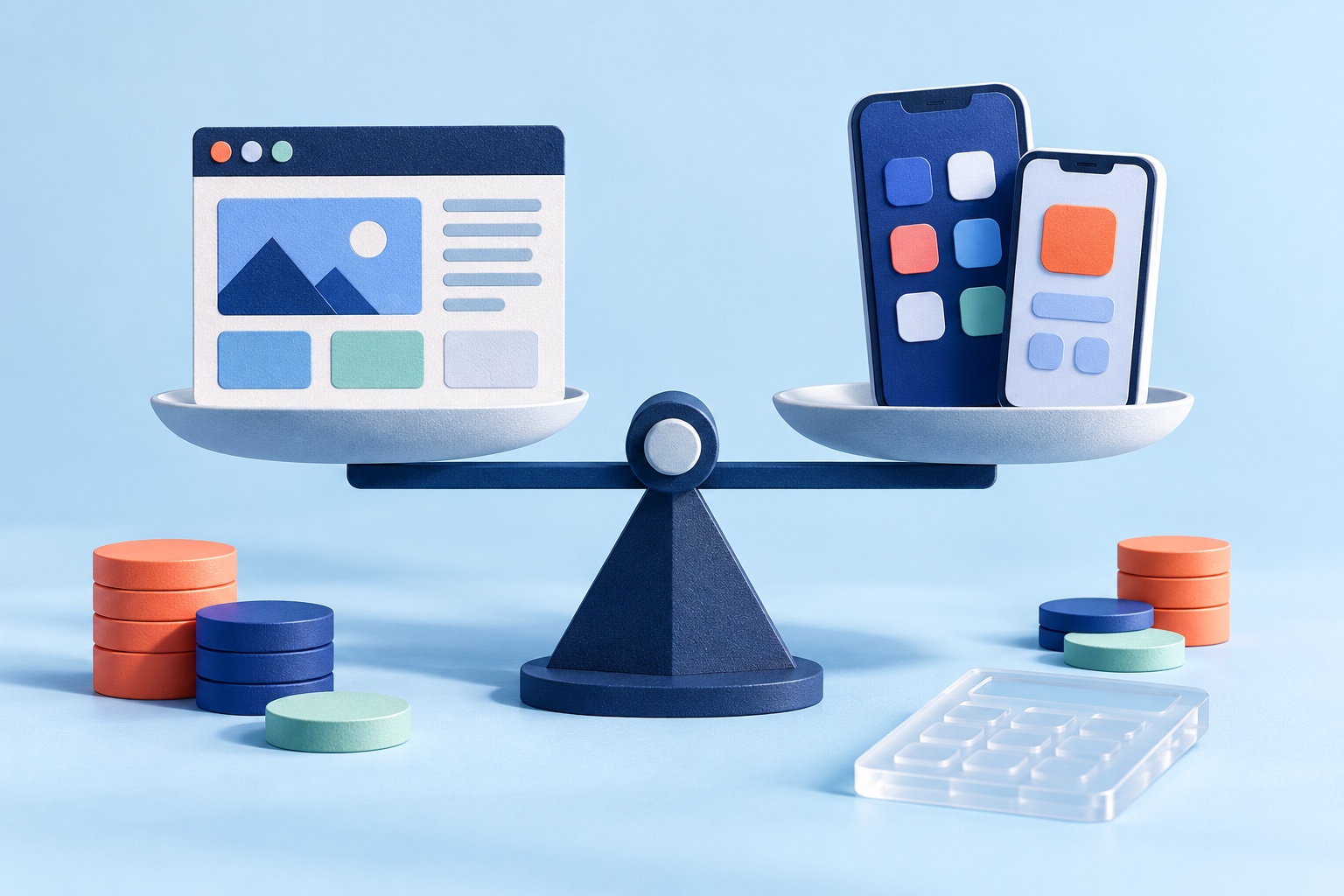
Turning a website into an app can cost less than $100 with a simple converter, several hundred dollars per month with a managed platform, or tens of thousands of dollars for a custom rebuild. The gap exists because these options deliver different levels of service and ownership.
For a small business whose website already works well on mobile, a converter is usually the most economical route. SiteTo.App, for example, currently charges $29 for an Android build, $79 for an iOS build, or $99 for both as a one-time payment. Developer accounts and store fees are separate.
Website-to-app costs at a glance
- Home-screen website shortcut: Free
- DIY progressive web app: Free in software; developer time varies
- No-code converter: Roughly $29 one-time to $250 or more per month
- Source-code template: Often about $100 per platform, plus setup work
- Managed conversion service: Commonly hundreds of dollars per month, sometimes with setup fees
- Custom app development: Commonly five figures and up, depending on scope
These ranges are not interchangeable quotes. A low-cost converter reuses the existing website. A custom app team redesigns and rebuilds the product, so its budget includes far more labor.
Cost option 1: A no-code website-to-app converter
A self-service converter is usually the lowest-cost path to an app-store build. You provide a URL, brand assets, navigation choices, and store information. The service generates the mobile project or finished build.
Pricing models include:
- One-time payment per platform
- Monthly subscription per app
- Annual platform license
- Free preview followed by a publishing plan
- Base plan plus paid native-feature modules
Compare at least 24 months of cost. A $69 monthly plan totals $1,656 over two years before store accounts or add-ons, while a one-time build has a different maintenance and support model. Confirm exactly what future updates, rebuilds, and policy changes include.
See our best website-to-app converter comparison for representative options.
Cost option 2: A PWA
The underlying technologies for a progressive web app are free. If the website already has a manifest, responsive design, HTTPS, and an appropriate service worker, a developer may finish the work quickly.
The real expense is engineering and testing. Offline caching, install prompts, notification behavior, updates, and platform differences all need attention. A PWA also may not satisfy a requirement for conventional App Store and Google Play distribution.
Use a PWA when direct web access and a shared codebase are more important than a standard store presence. Read PWA vs. native vs. WebView before deciding.
Cost option 3: A source-code template
A WebView template can cost around $100 or more per platform. This sounds inexpensive because you receive a ready-made Xcode or Android Studio project. However, someone still has to configure it, manage signing certificates, resolve build problems, test releases, complete store forms, and maintain dependencies.
For a developer, that trade can be attractive. For a business owner who must hire help each time the platform changes, the service cost may exceed the template price.
Cost option 4: A managed service
Managed providers typically configure the app, handle store submission, and support ongoing releases. Prices often run into hundreds of dollars per month, sometimes with a setup charge.
This can be rational for an established business. If a launch delay costs more than the service, or an internal product team has no mobile-release capacity, hands-on support may provide better value than the cheapest software.
Ask whether the price includes both platforms, design work, native integrations, submission, rejection handling, ongoing updates, and support response times.
Cost option 5: Custom development
Custom native or cross-platform development is the highest-cost option because a team must design and implement the mobile product. The project may include product discovery, user-interface design, APIs, authentication, mobile code, analytics, accessibility, quality assurance, release engineering, and project management.
The final cost depends on screens and behavior, not simply the word “app.” A content reader is much smaller than a marketplace with messaging, payments, maps, and real-time delivery tracking.
Custom development is justified when the app must work very differently from the website or requires advanced device capabilities. It is often unnecessary when the goal is to package a proven mobile web journey with a few native features.
App-store fees you should budget separately
Apple Developer Program
Apple currently charges $99 per membership year for the Apple Developer Program. Organizations may need a D-U-N-S Number and legal-entity verification. The account owner should usually be the business whose name should appear on the store listing. Confirm current terms on Apple's membership page.
Google Play developer registration
Google currently lists a one-time $25 fee for full distribution, with identity verification and testing requirements that vary by account type and location. Review the current Play Console access conditions.
These fees go to Apple and Google, not the converter.
Hidden and ongoing costs

Store assets
You need an app icon, screenshots, descriptions, privacy answers, support details, and sometimes preview media. A founder can create these, but professional design or localization adds cost.
Website improvements
If the current site is slow or awkward on mobile, budget to fix it first. Responsive layout, checkout problems, cookie prompts, and login flows remain visible inside the app.
Privacy and compliance
Apps that collect personal data need accurate disclosures and a public privacy policy. Health, finance, children’s products, subscriptions, and other regulated areas can require legal or specialist review.
Maintenance
Apple and Google update operating systems, SDK requirements, and store policies. Ask who produces a new build when a requirement changes, how quickly they respond, and whether it is included in the price.
Native services
Push-notification delivery, analytics, maps, storage, authentication, and other external services may have their own usage-based charges.
Marketing
Publishing does not create demand automatically. Screenshots, app-store optimization, launch communication, support, and paid acquisition may cost more than the build itself.
A simple budget formula
Estimate the first two years with this formula:
Build or license + 24 months of platform fees + developer accounts + setup labor + design + maintenance + required third-party services
Then compare each option on the same period. Also estimate internal time. Ten hours spent troubleshooting certificates is not free simply because it does not appear on an invoice.
How to avoid overpaying
- Confirm that repeat customers genuinely need an app.
- Fix the mobile website before choosing a converter.
- List essential native features separately from nice-to-have ideas.
- Preview the app on a real phone before paying.
- Compare two-year cost, not a promotional first month.
- Keep developer accounts in the business’s name.
- Ask what happens if the subscription ends.
- Understand who supplies future store-compliant builds.
Which price tier is right for you?
Choose a low-cost converter when the mobile website already does the core job and the app needs branding, navigation, notifications, and store distribution. Choose a technical template when you have a developer. Choose managed service when speed and support outweigh price. Fund a custom build only when validated mobile requirements cannot be delivered well through the existing site.
For many small businesses, the lowest-risk first step is a real preview. Try your website in SiteTo.App before choosing iOS, Android, or both.
See your website as an app
Customize the experience and preview it before choosing a platform.
Build your preview