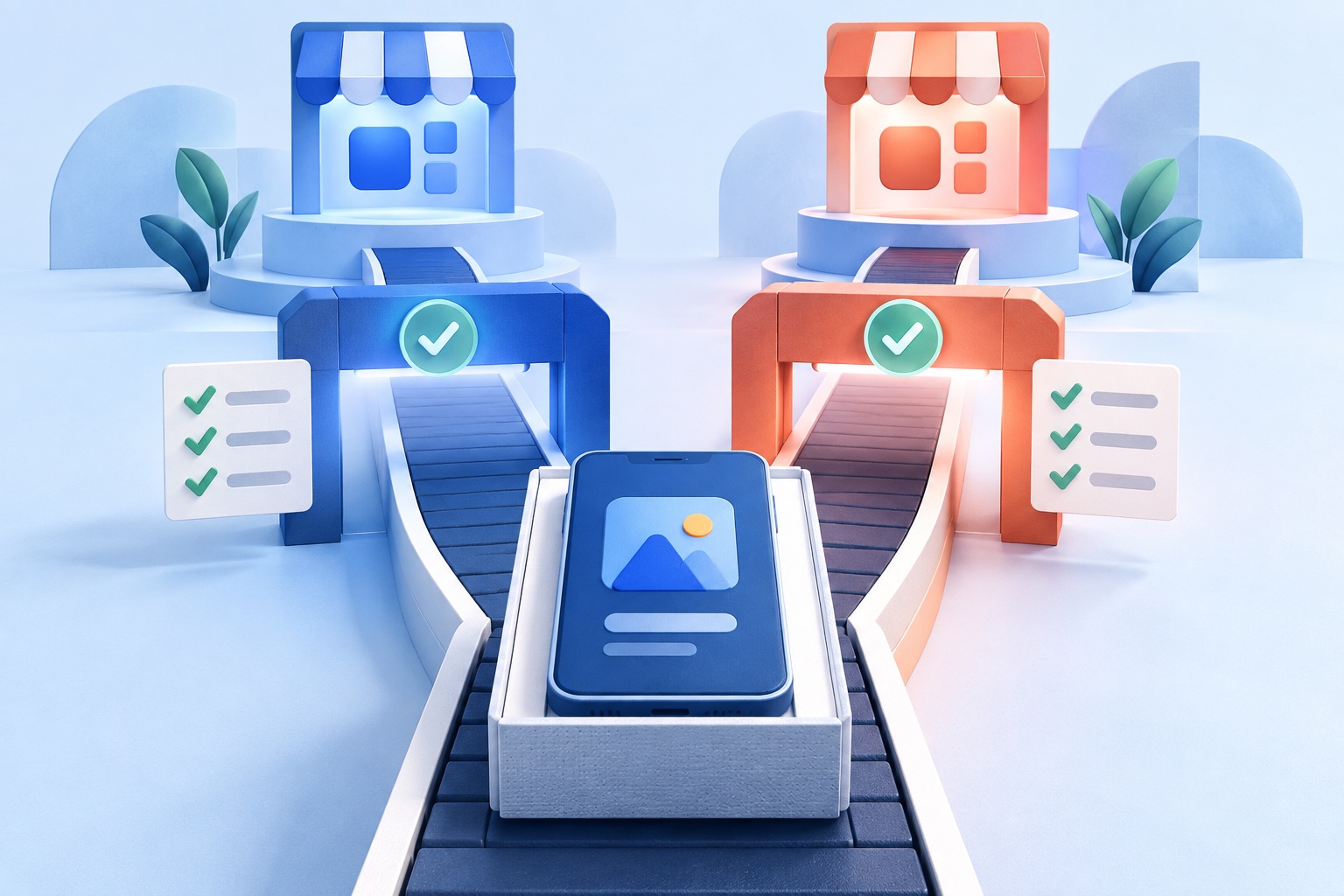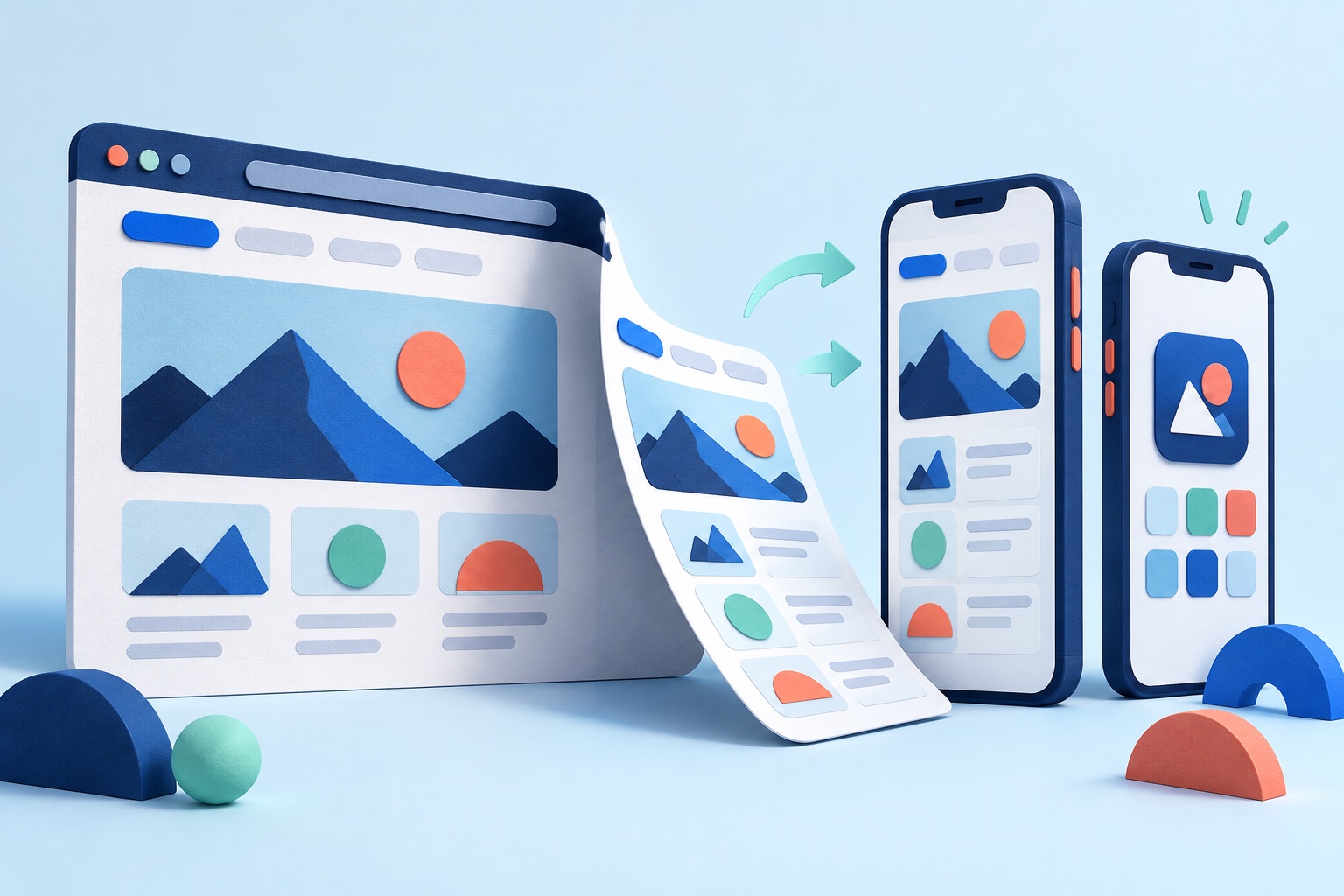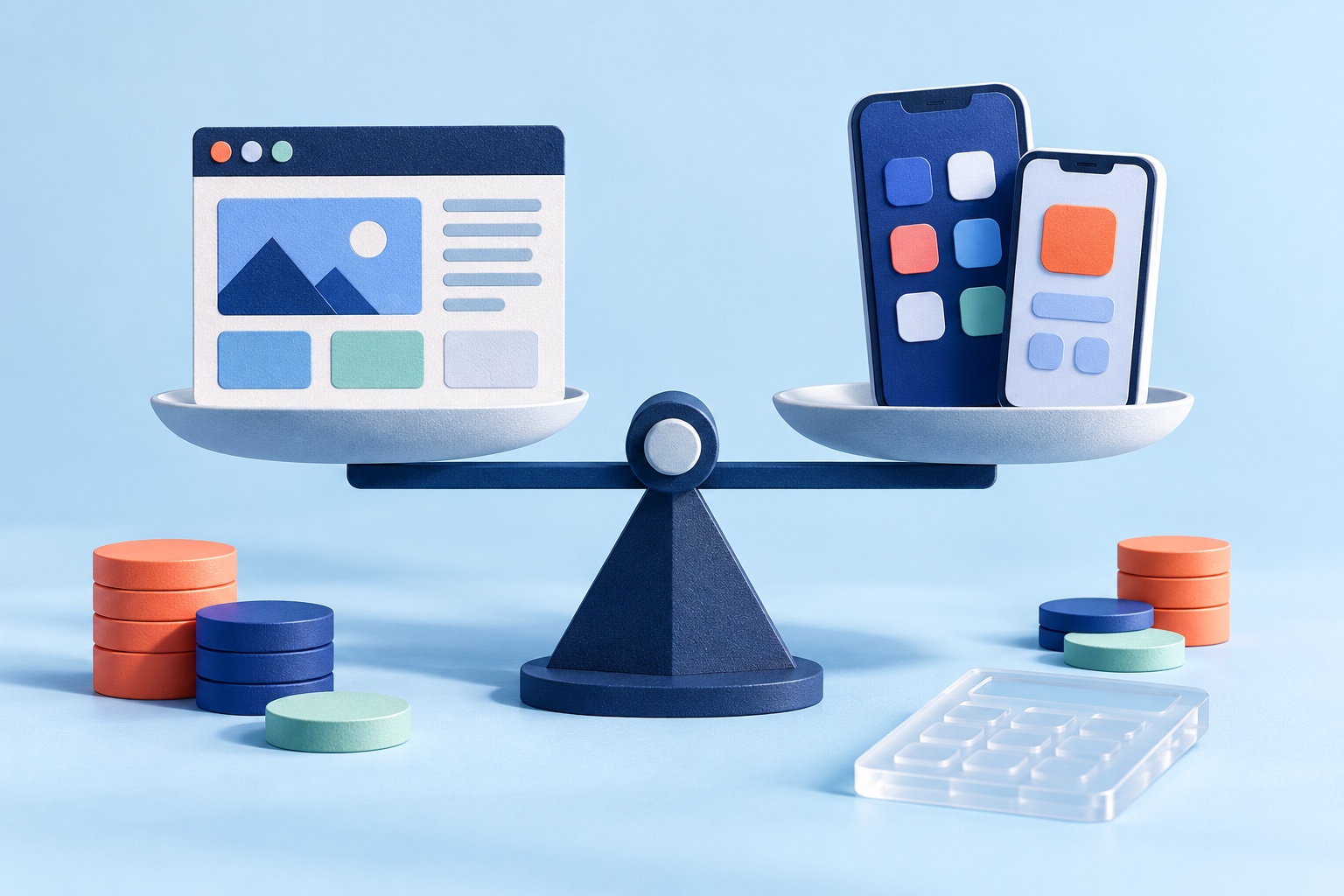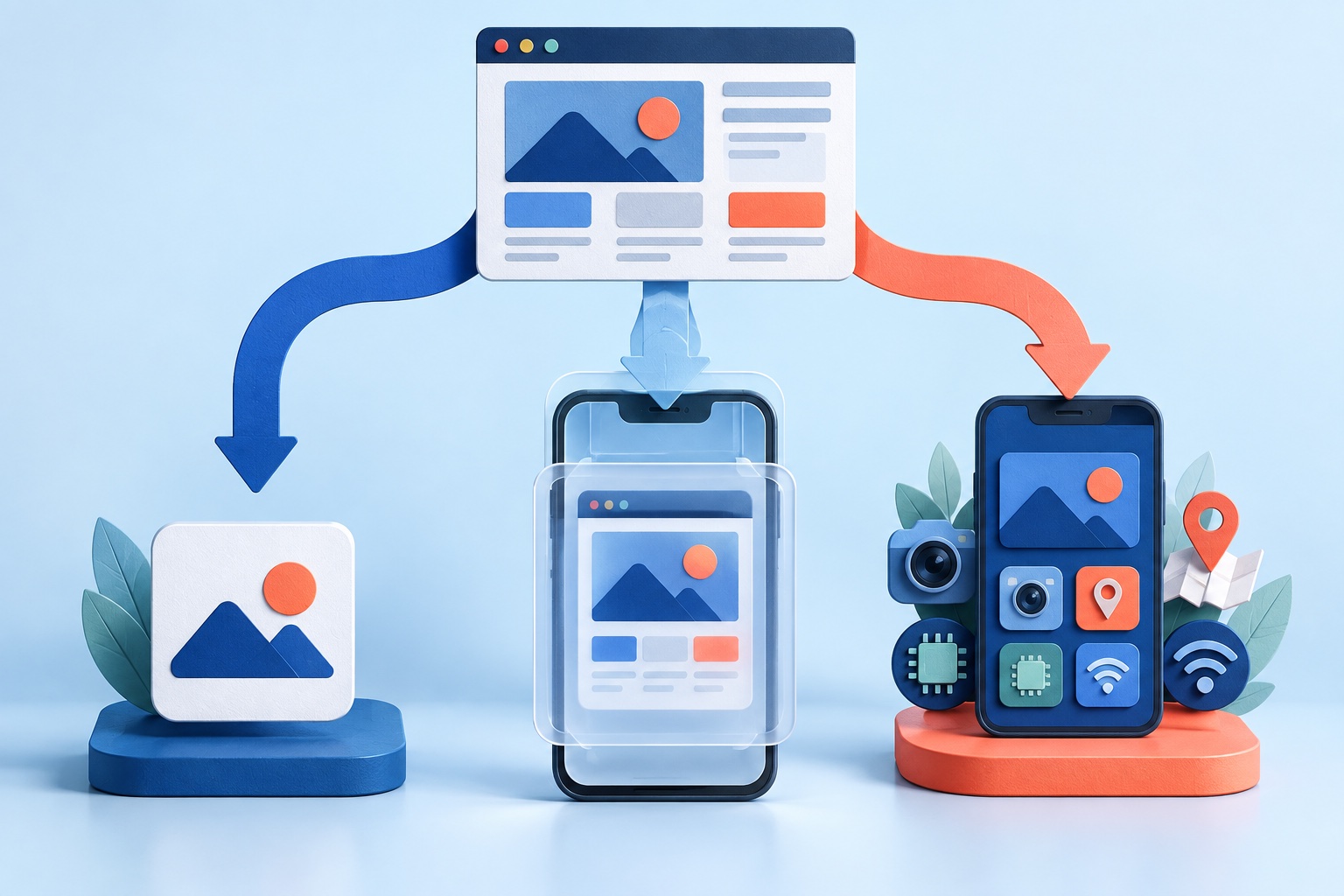
Choose a PWA when web reach, instant updates, and one codebase matter most. Choose a WebView-based app when you already have a strong mobile website and want a practical route to the App Store and Google Play. Choose a custom native app when performance, advanced offline behavior, or deep device integration justifies a larger budget and separate mobile development.
None is universally best. The right architecture follows the product’s real requirements.
What is a PWA?
A progressive web app is a website enhanced to behave more like an installed application. It typically uses HTTPS, a web app manifest, responsive layouts, and a service worker for caching or offline behavior. Users visit it through a URL and may add it to their home screen.
Strengths
- One web deployment reaches many devices
- Updates appear immediately
- No store is required for basic distribution
- Search engines can index public pages
- The same URL supports sharing and links
Limitations
- Install behavior and capabilities differ across browsers and operating systems
- Users may not know how to install it
- Conventional app-store discovery is limited
- Some background, hardware, and system integrations are constrained
PWAs work especially well for content, lightweight tools, forms, customer portals, and products where a link is the natural entry point.
What is a WebView app?
A WebView app is an installable native shell that displays web content inside an embedded browser component. The shell can add native navigation, notifications, deep links, file handling, permissions, and bridges to device APIs.
The term “wrapper” sometimes implies that all WebView apps are identical. They are not. A blank shell around a desktop site delivers a poor experience. A carefully configured app with responsive content, native navigation, strong loading and error states, appropriate link handling, and useful device integrations can feel cohesive.
Strengths
- Reuses the website and its content system
- Faster and less expensive than rebuilding most products
- Can publish through the major app stores
- Web updates appear without duplicating content work
- Native additions can support notifications and device behavior
Limitations
- Quality depends heavily on the mobile website
- Advanced native interactions may require custom bridges
- Network-dependent screens need thoughtful failure states
- Apple may reject an app that provides too little value beyond the website
WebView apps suit ecommerce sites, publications, communities, booking products, directories, and authenticated portals with a proven mobile web experience.
What is a native app?
A native app is written for a mobile platform using its primary tools and frameworks—for example, Swift or SwiftUI on iOS and Kotlin on Android. Cross-platform frameworks such as React Native and Flutter compile or render substantial native application experiences from a shared project; they occupy a middle ground but still require dedicated app development.
Strengths
- Maximum platform control
- Strong performance for complex interaction and graphics
- Broad access to device and operating-system APIs
- Sophisticated offline data and background behavior
- Interface can follow platform conventions closely
Limitations
- Highest build and maintenance cost
- Mobile features may duplicate website work
- Releases require store builds and review
- Specialized developers and quality assurance are usually needed
Native development is appropriate for products built around live location, Bluetooth, intensive media editing, complex offline workflows, augmented reality, games, or other mobile-first capabilities.
PWA vs. WebView vs. native by decision factor
Cost
A PWA is often least expensive when the website already exists and a developer needs only to add installability and caching. A self-service WebView converter can also be inexpensive; SiteTo.App begins at $29 for Android, $79 for iOS, or $99 for both as a one-time app-build payment. Custom native development is usually the most expensive because it creates and maintains a separate product surface.
Compare full ownership costs in our website-to-app cost guide.
Time to launch
PWA enhancements and converter previews can take hours or days for a straightforward site. Store preparation and review add time to any publicly listed app. A custom native product commonly takes months because design, engineering, backend work, testing, and release preparation all expand with scope.
App-store presence
WebView and native apps can be distributed through the App Store and Google Play when they meet current requirements. PWAs are primarily distributed through the web, though packaging and some store routes exist. If customers explicitly expect to search a major store, an installable store app is the clearer fit.
Search visibility
Public PWA pages are web pages and can rank directly in search. The web content shown by a WebView app remains indexable at its website URLs, while the store listing is a separate discovery surface. Native app screens generally are not a substitute for an SEO-accessible website.
For most businesses, the strongest approach is not app instead of website; it is app plus website.
Performance
Native applications offer the highest ceiling for demanding graphics and interaction. WebView performance depends on the website, the embedded browser, and how much bridge communication occurs. PWAs run in the browser environment.
For forms, articles, stores, accounts, bookings, and typical business interfaces, a fast mobile website can perform well inside a modern WebView. A 3D game or real-time video editor is a different workload.
Offline capability
Native apps offer the most control over local storage, synchronization, and background work. PWAs can cache an application shell and selected data with service workers. WebView apps can combine web caching with native offline screens or downloads, depending on implementation.
Define “offline” precisely. Showing saved articles is much simpler than editing complex records across devices and resolving sync conflicts later.
Device features
Native code can access the broadest set of platform APIs. WebView apps can expose selected capabilities through a native bridge or plugin. PWAs support a growing range of web APIs, but availability differs by browser and platform.
Check your actual needs—camera upload, notifications, location, biometrics, Bluetooth, background audio—rather than treating “native features” as one checkbox.
Updates and maintenance
PWA and website content updates deploy through the web. WebView apps also reflect most website changes immediately, although native-shell changes require a new build. Native apps require store releases for application-code updates, while backend content can still change independently.
Every option needs maintenance. Browsers, operating systems, plugins, store policies, SDK targets, and privacy requirements change over time.
What Apple’s rules mean for WebView apps
Apple’s App Review Guideline 4.2 says an app should go beyond a repackaged website and provide lasting utility or entertainment value. It also warns against products that primarily act as web clippings, marketing material, or link collections.
That does not ban web content. It means the complete app should deserve a place on the phone. Focus navigation on mobile tasks, handle native states well, add useful device capabilities, and ensure the underlying service has meaningful functionality.
A practical decision framework
Choose a PWA if:
- A URL and search visibility are the main acquisition channels
- Avoiding app-store dependency is important
- Required device features work well on the target browsers
- The team wants one web deployment
Choose a WebView app if:
- The mobile website already performs the core journey well
- Customers want an App Store or Google Play download
- Push notifications, native navigation, or deep links add value
- Speed and budget rule out a full rebuild
Choose a native or cross-platform app if:
- The product is mobile-first rather than website-first
- Advanced offline workflows are central
- It relies on high-performance graphics or deep hardware access
- The business can fund dedicated mobile development and maintenance
Can you combine the approaches?
Yes. Many businesses keep an SEO-friendly website or PWA for discovery and use an app for returning customers. A WebView shell can also display web content while selected flows use native screens. Over time, a team can move high-value interactions to native code without rebuilding everything on day one.
Architecture can evolve. Start with the least complex option that serves users well and preserves a path to add capability.
The bottom line
A PWA is the best web-first answer. A WebView app is the fastest bridge from a proven mobile website to the app stores. A custom native app is the most powerful and expensive route.
If your website is already responsive and customers repeatedly use it, test a converter before commissioning a rebuild. Our complete website-to-app guide explains the process, and you can preview your site in SiteTo.App without starting from scratch.
See your website as an app
Customize the experience and preview it before choosing a platform.
Build your preview