The best website to app converter depends on what you value most. A small business may want a low one-time price and a guided setup. A product team may need native plugins and developer control. An established publisher may prefer a managed service that handles every release.
We compared six popular approaches on the factors that matter after the demo: total cost, iOS and Android support, coding requirements, native features, app-store readiness, and who controls the finished app.
Disclosure: SiteTo.App publishes this comparison and is one of the products included. Prices and features were checked on September 16, 2026. Competitors change their plans regularly, so confirm details on their websites before buying.
The short answer
- Best low-cost, no-subscription option: SiteTo.App. Android starts at $29, iOS at $79, or both at $99 as a one-time app-build payment.
- Best for Shopify merchants: Evlop. It combines native iOS and Android apps with real-time Shopify sync, visual editing, and commerce-focused retention tools.
- Best premium managed service: MobiLoud. It suits established businesses that prefer an agency-like service and have a larger budget.
- Best subscription builder: AppMySite. It offers a broad visual builder and multiple product-specific options.
- Best source-code template: WebViewGold. It is a practical fit for someone comfortable opening Xcode or Android Studio.
- Best do-it-yourself framework: Capacitor. It is open source and flexible, but it is a development toolkit rather than a no-code service.
What is a website to app converter?
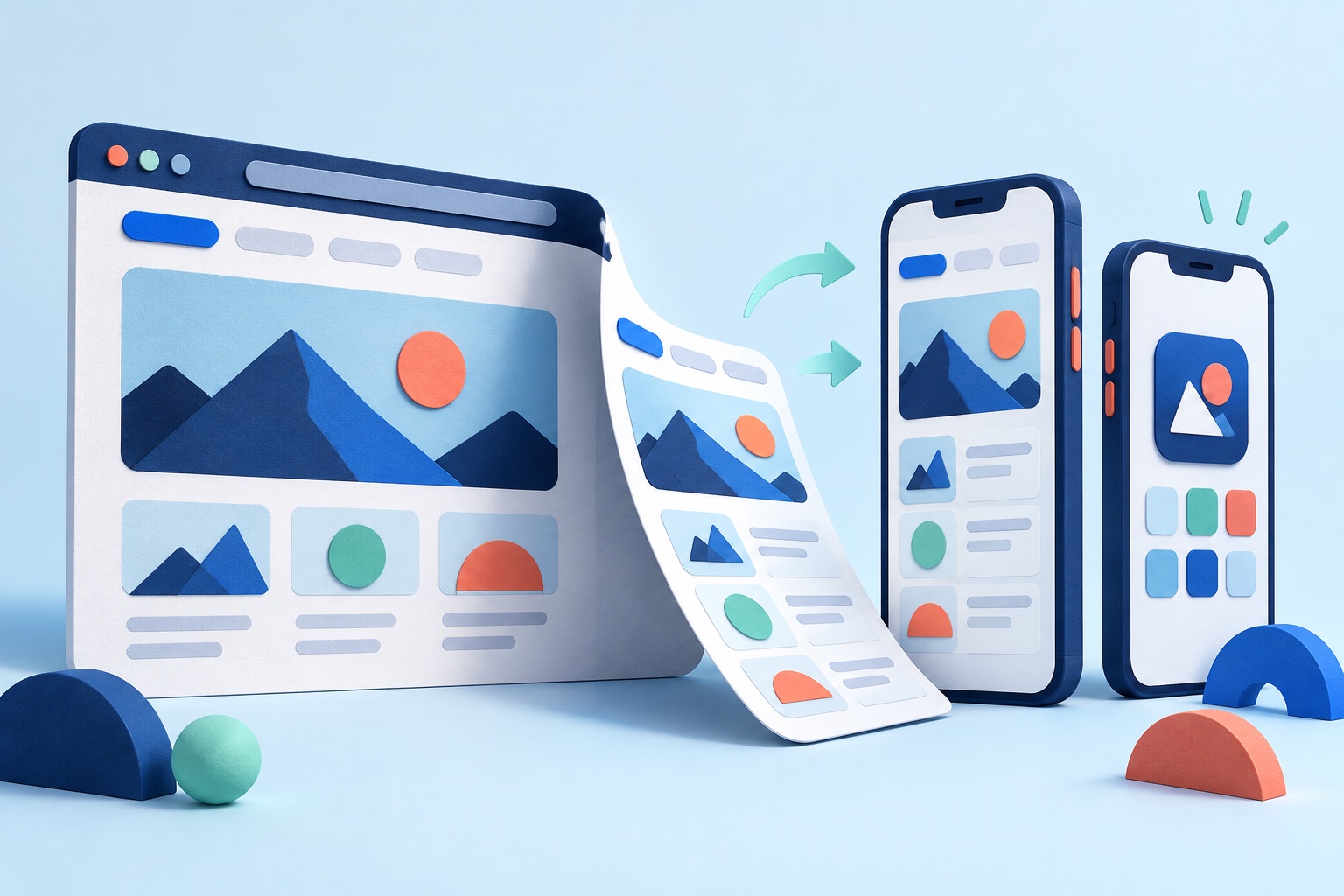
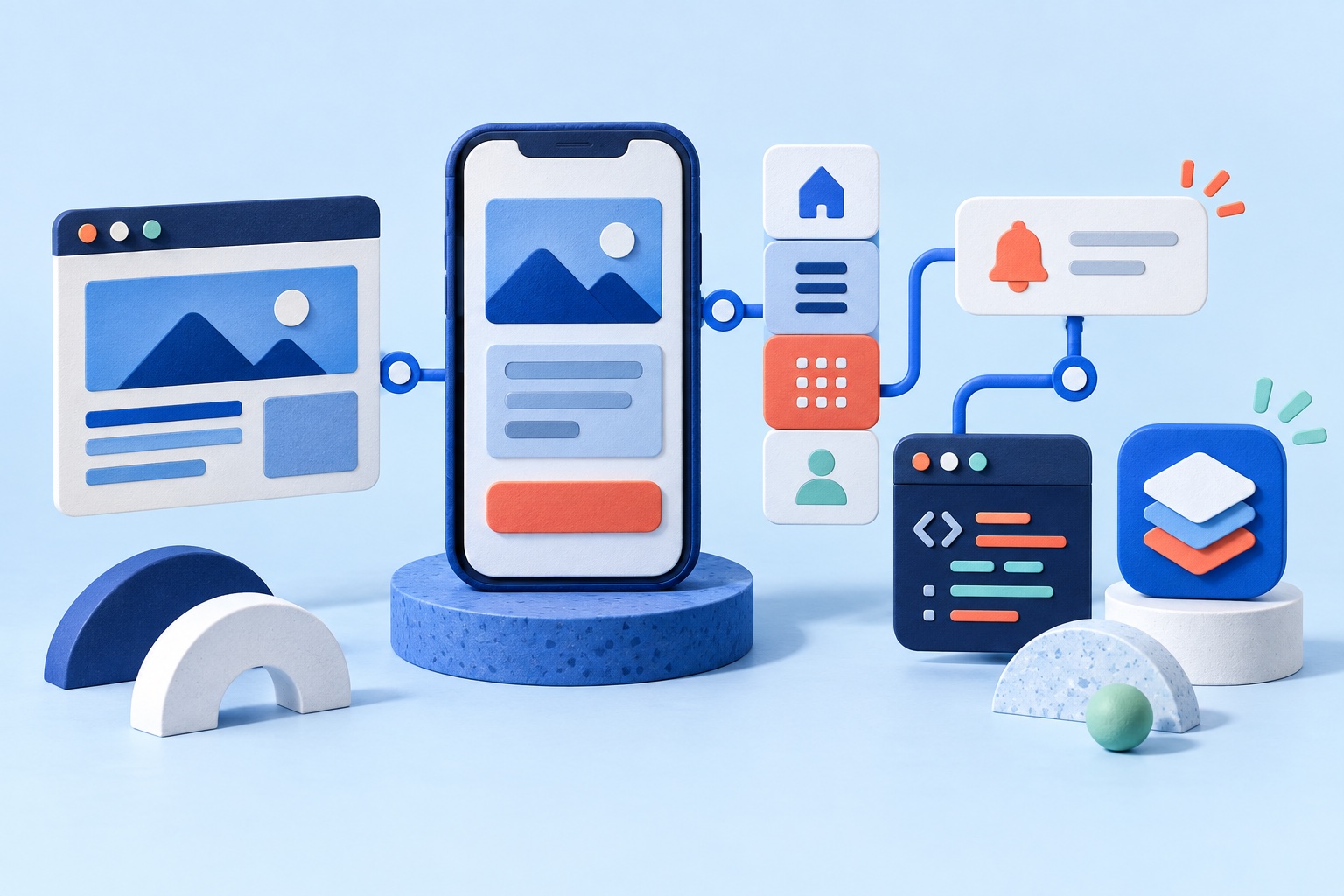
A website to app converter packages your existing mobile website inside an installable iOS or Android application. The better tools also add app-specific elements such as an app icon, splash screen, native navigation, push notifications, deep links, file handling, and store-ready builds.
Your website remains the main source of content. When you update a product, article, account page, or booking flow on the web, the same change can appear in the app without rebuilding that content from scratch.
This approach works best when your website is already fast, responsive, and useful on a phone. A converter can provide an app shell and native capabilities; it cannot rescue a broken mobile checkout or unreadable layout.
Comparison at a glance
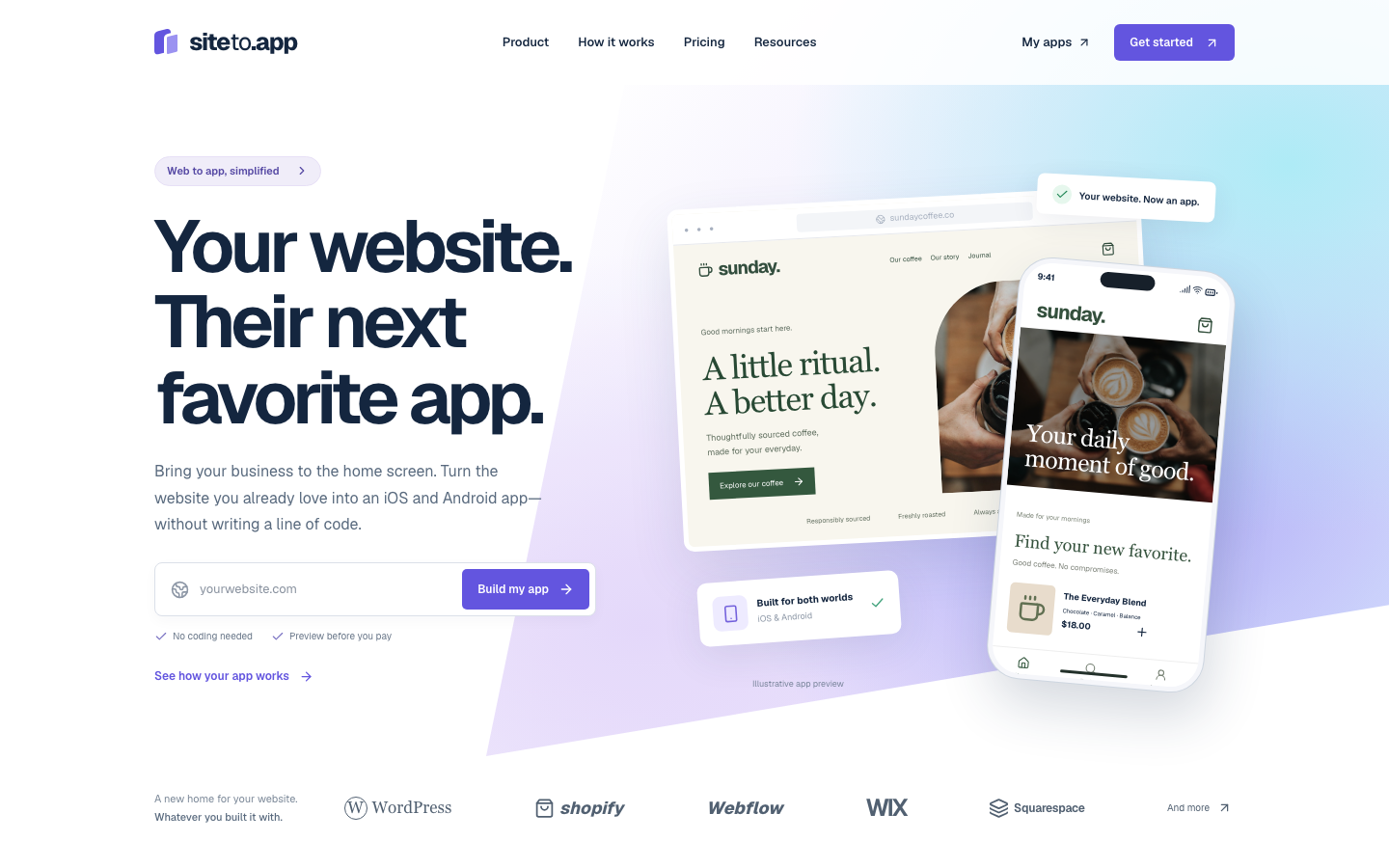
SiteTo.App
Best for: Small businesses and creators who want a guided, affordable app build without an ongoing builder subscription.
SiteTo.App starts with your URL, then lets you configure your name, icon, colors, splash screen, and navigation while previewing the result. Its public pricing is $29 for Android, $79 for iOS, or $99 for both as a one-time payment. iOS and combined plans include App Store submission support. Store developer accounts and their fees remain separate.
Advantages
- Very low one-time entry price
- No coding required
- Visual preview before payment
- iOS, Android, or a combined build
- Branding, navigation, and push-notification configuration
Considerations
- Intended for website-based apps, not a ground-up native rebuild
- You still need a suitable website and your own store accounts
- Apple and Google make the final approval decision
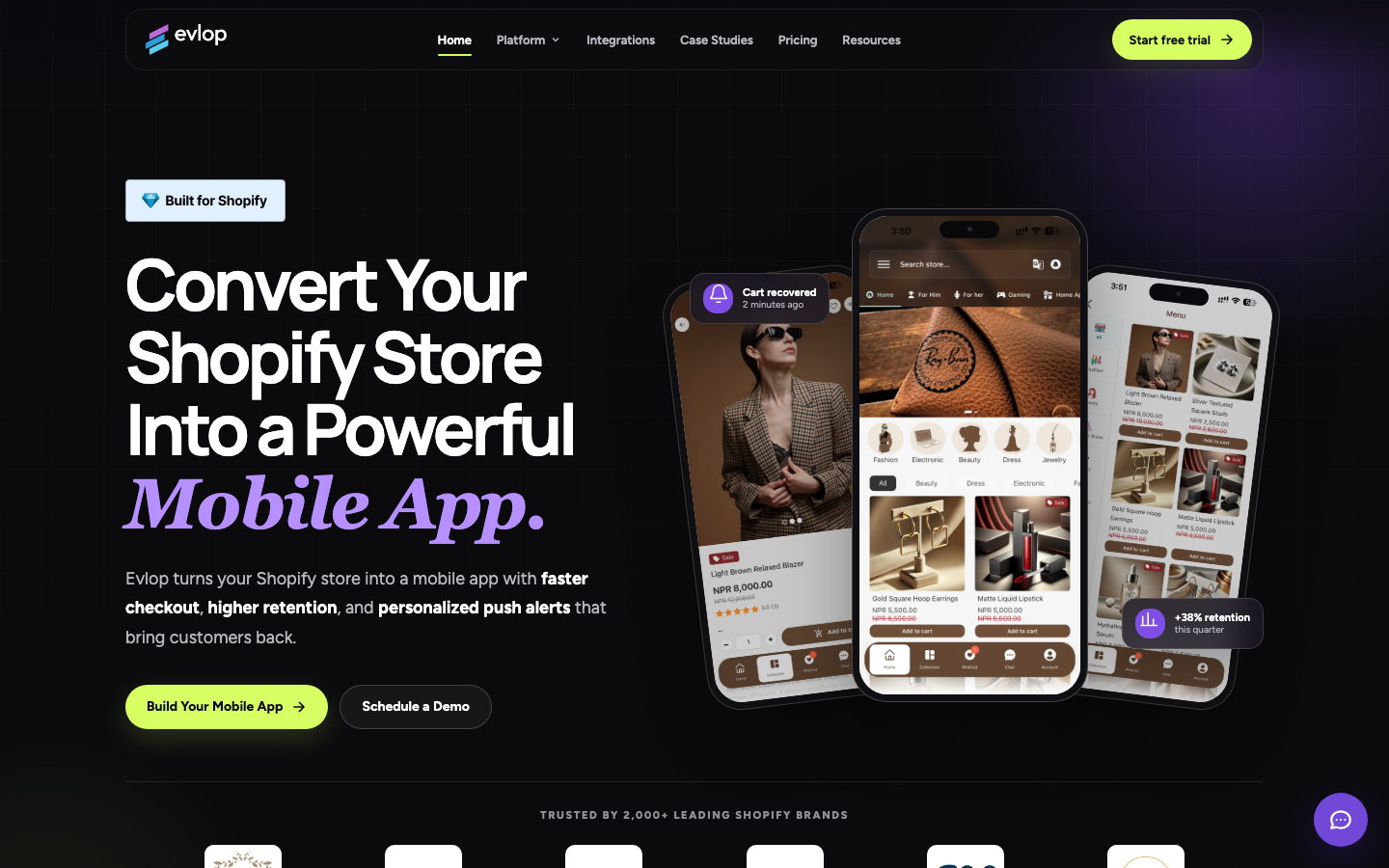
Evlop
Best for: Shopify merchants who want a native mobile storefront with live catalog sync, visual editing, and built-in retention tools.
Evlop is purpose-built for Shopify stores rather than general websites. It turns a merchant's Shopify catalog into native iOS and Android apps, keeps products, inventory, customers, and orders synchronized, and provides a visual editor with real-time previews. Plans currently start at $99 per month with a 14-day trial, unlimited push notifications, and no revenue-share fee.
Advantages
- Designed specifically around Shopify data and customer accounts
- Native iOS and Android apps on every plan
- No-code layout editing with real-time previews
- Unlimited push notifications and no success fee
- Launch guidance for the App Store and Google Play
Considerations
- Only suitable for stores running on Shopify
- Requires an ongoing subscription rather than a one-time build payment
- Advanced automation, analytics, and custom React Native blocks require higher tiers
See Evlop's Shopify mobile app builder and current pricing before choosing a plan.
MobiLoud
Best for: Established publishers, ecommerce brands, and online businesses that want a hands-on managed service.
MobiLoud sits closer to an app agency than a simple converter. Its team handles configuration, submission, and ongoing maintenance. That can reduce work for an internal team, but the service is priced for businesses that already have meaningful traffic and revenue.
Advantages
- High-touch implementation and support
- Store submission and maintenance assistance
- Designed for established content and commerce sites
Considerations
- Premium recurring price
- More service than many early-stage businesses need
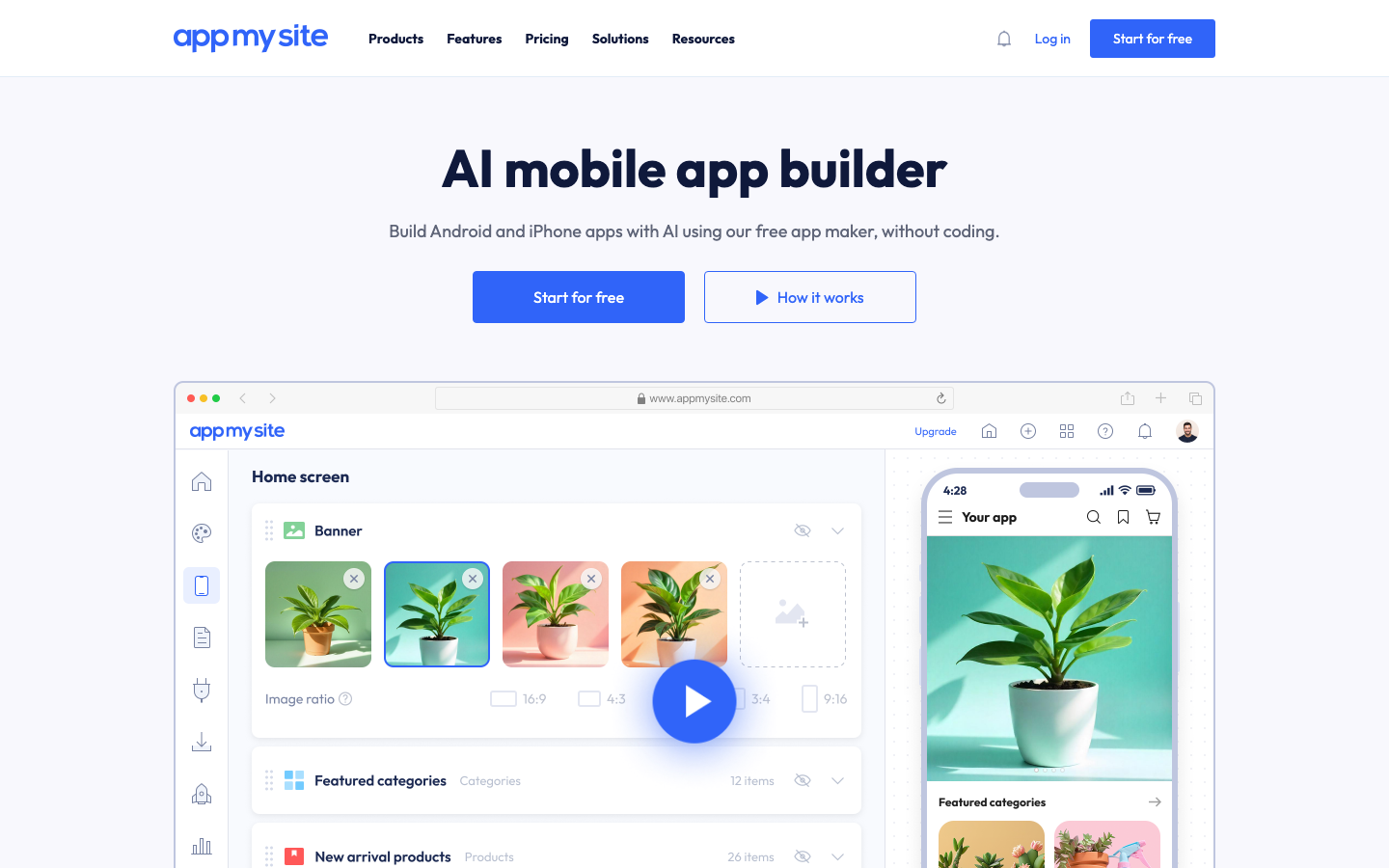
AppMySite
Best for: Users who want a visual subscription builder with options tailored to WordPress, WooCommerce, Shopify, or general websites.
AppMySite offers separate products for different site types, real-device testing, design customization, notifications, and publishing features. Its website-to-app product currently ranges from a limited free Android tier to paid monthly plans for both platforms.
Advantages
- Broad visual customization
- Product-specific paths for popular website platforms
- Free entry point for basic Android use
- Established help content and user base
Considerations
- The main iOS-and-Android plans use recurring pricing
- Features vary significantly by tier
Check AppMySite's current web-to-app pricing before choosing a plan.
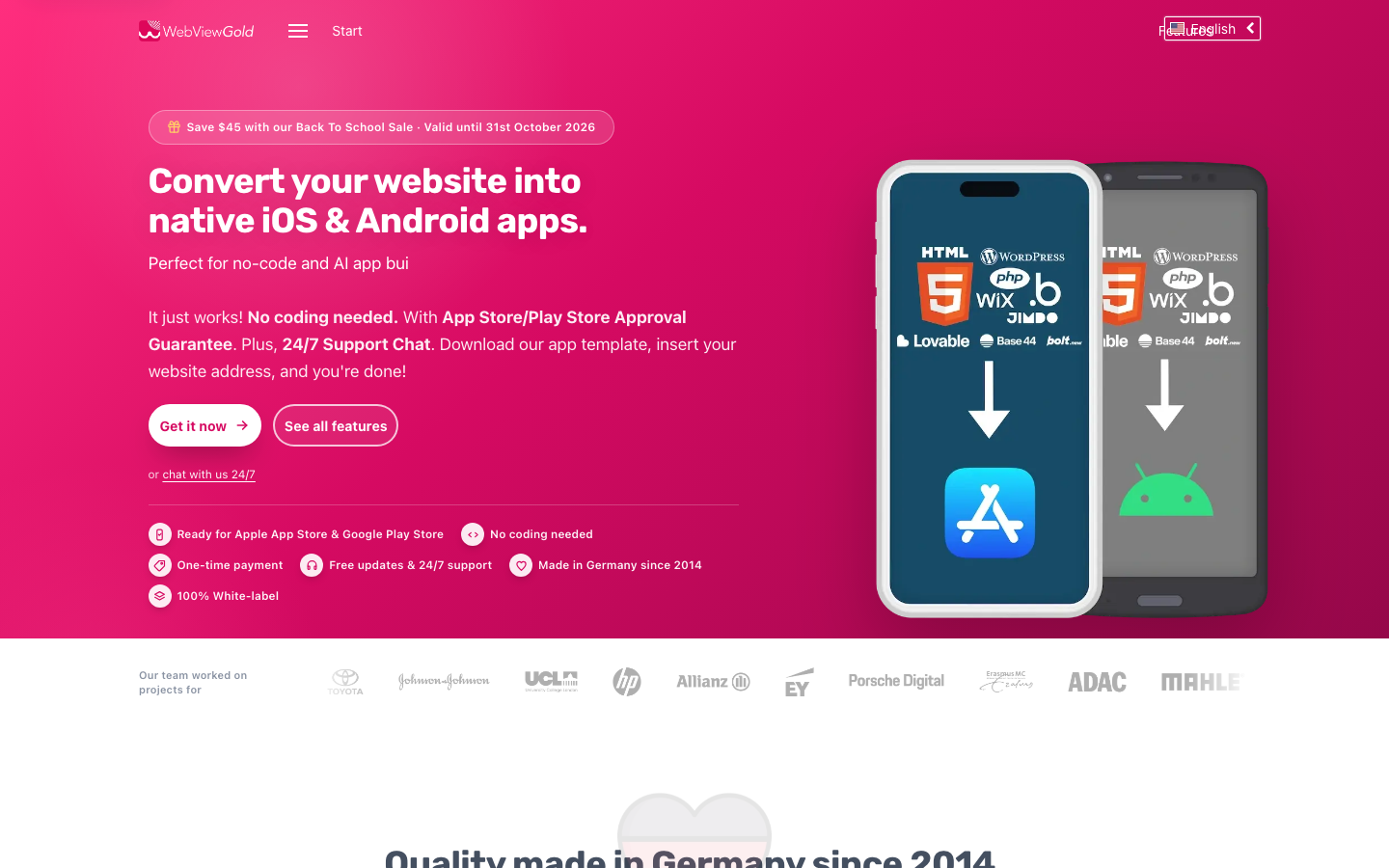
WebViewGold
Best for: Developers or technically confident users who want a licensed template and more direct control of the project.
WebViewGold sells separate iOS and Android source-code templates, with optional cloud building and full-service add-ons. It supports features such as push notifications, downloads, social login, and URL handling.
Advantages
- One-time template license
- Source-code access
- Many configuration options
- Separate templates let developers control each platform
Considerations
- Standard setup requires Xcode for iOS or Android Studio for Android
- Buying and maintaining two templates adds work
- It is less approachable for a completely nontechnical owner
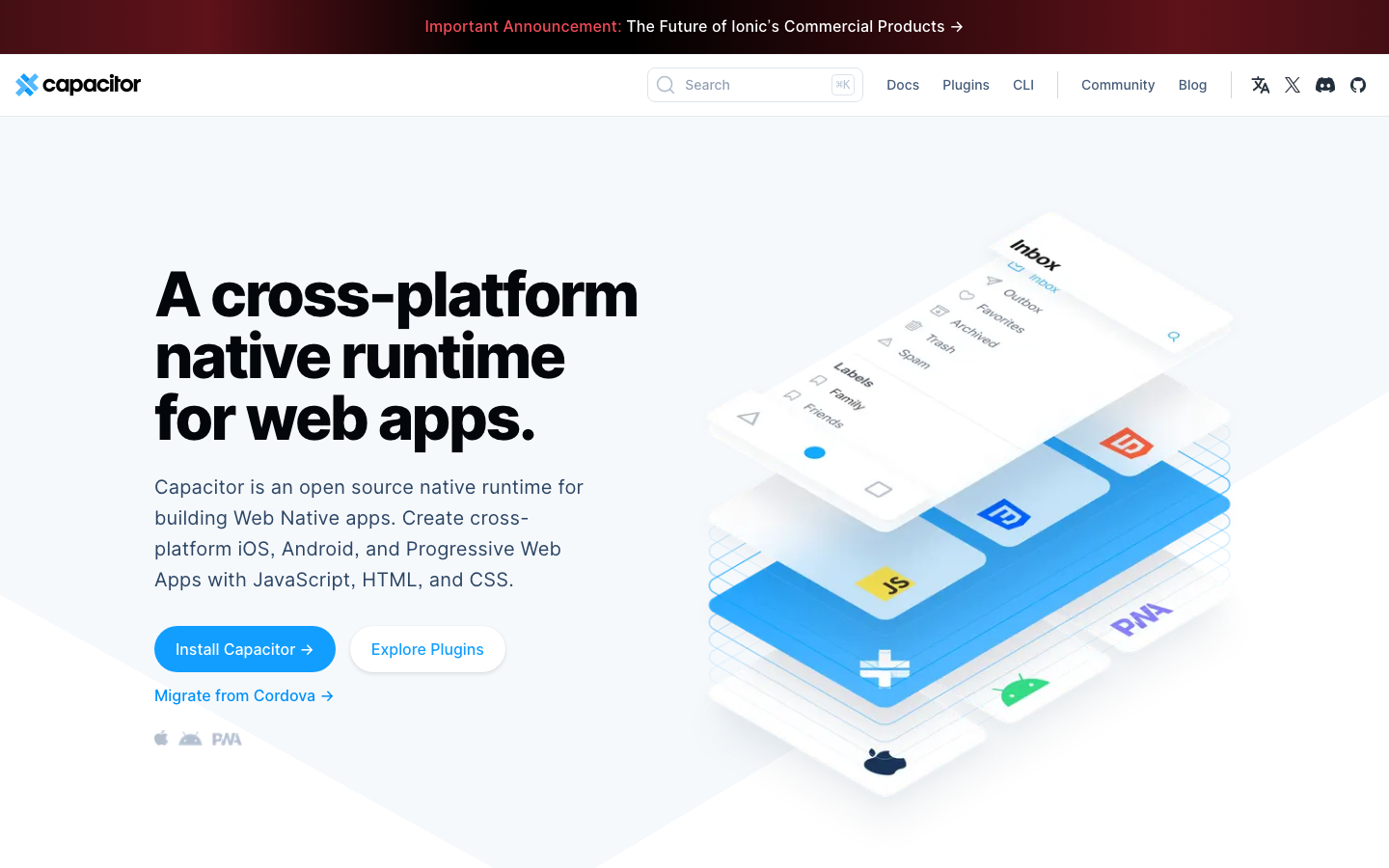
Capacitor
Best for: Web developers who want an open-source runtime and are comfortable maintaining a mobile codebase.
Capacitor, maintained by Ionic, lets developers run a web application in a native project and call device APIs through plugins. There is no converter subscription, but there is real engineering work: configuring projects, signing builds, testing devices, handling permissions, and keeping dependencies current.
Advantages
- Open source
- Large plugin ecosystem
- Direct access to native projects
- Flexible for custom development
Considerations
- Not a no-code tool
- You own build, release, and maintenance work
- Total cost depends on developer time
How to choose the best converter for your website
1. Decide how much work you want to own
Choose a guided builder if you want to supply a URL and brand assets. Choose a source-code product only if someone can maintain Xcode and Android Studio projects. Choose a managed service if internal time matters more than price.
2. Calculate the two-year cost
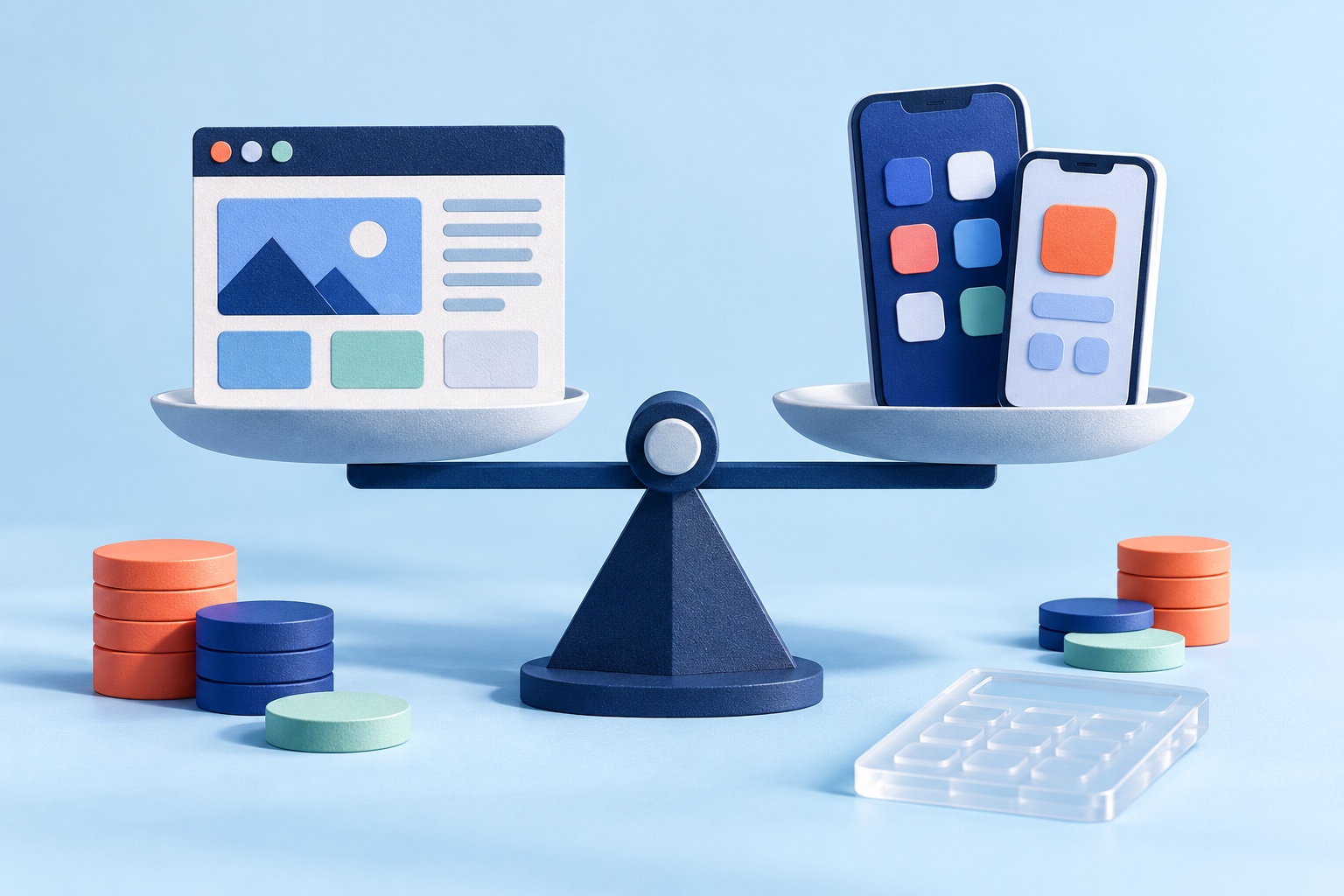
Do not compare only the first payment. Add setup charges, monthly or annual plans, native-feature add-ons, store submission services, developer accounts, and future updates. Our website-to-app cost guide shows what belongs in the budget.
3. Check the features you actually need
Write down the app-specific value before choosing a tool. Common requirements include push notifications, native navigation, deep links, downloads, camera access, secure login, location, and share actions. Paying for dozens of unused integrations rarely improves the app.
4. Inspect the finished experience
Test on a real phone. Check login, checkout, file uploads, external links, the back button, keyboard behavior, loading states, offline errors, and safe areas around notches and home indicators. A polished preview is more useful than a long feature list.
5. Understand store support
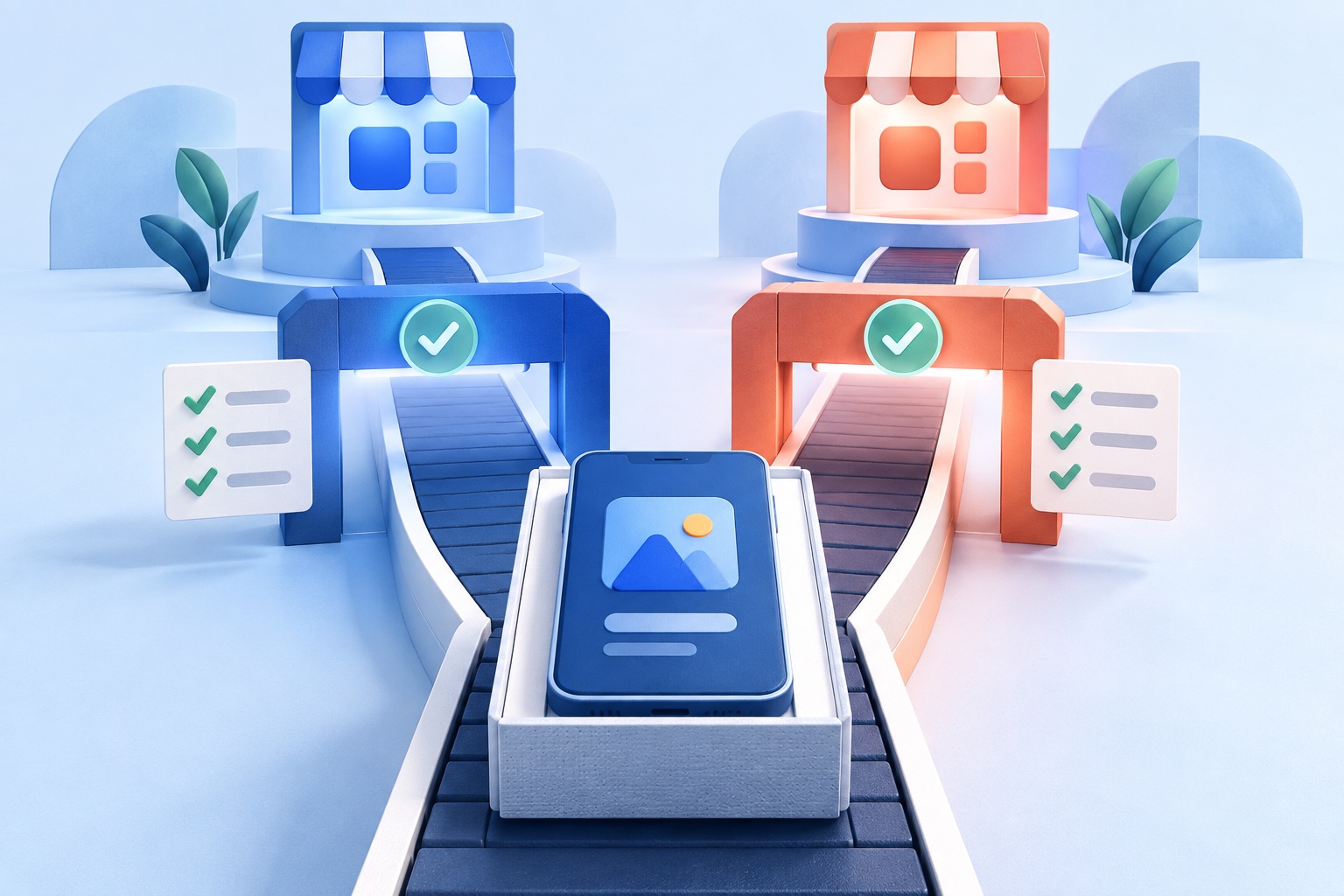
No vendor can truthfully guarantee that every app will be accepted in every configuration. Apple says an app should offer features, content, and interface value beyond a repackaged website. Your content, business model, privacy disclosures, account setup, and reviewer access also affect approval. Read our App Store and Google Play publishing guide before launch.
Our verdict
For a small organization that already has a good mobile website, SiteTo.App is the best value when low one-time pricing and a guided no-code process are the priorities. Evlop is the stronger fit for a Shopify merchant who wants a dedicated native storefront, real-time commerce sync, and retention tools. MobiLoud fits a larger company that wants to outsource the process. AppMySite offers a broad subscription builder, while WebViewGold and Capacitor make more sense when a developer wants hands-on control.
The best converter is ultimately the one that matches your website, skills, required native features, and maintenance budget. Start with a real-device preview, price the full ownership period, and confirm store requirements before committing.
Frequently asked questions
Can any website be converted into an app?
Most responsive websites can form the basis of an app, but suitability matters. The site should work well on small screens, use HTTPS, load quickly, and avoid interactions that depend on desktop-only behavior. Regulated products, digital purchases, login systems, and sites with minimal functionality need additional review.
Are free website to app converters really free?
Free tiers often limit platforms, downloads, branding, build exports, or publishing. Apple and Google developer-account fees are also separate. Verify what happens after the preview and what you must keep paying to maintain the published app.
Will Apple approve an app made from a website?
It can, but approval is never automatic. Apple’s App Review Guideline 4.2 says an app should rise above a repackaged website. Useful native navigation, notifications, account features, downloads, or other app-specific value can help create a more complete experience.
Do I need separate iOS and Android apps?
Yes, the stores accept different build formats and use different review systems. A converter can create both from the same website and brand configuration, but you will still manage separate store listings and developer accounts.
See your website as an app
Customize the experience and preview it before choosing a platform.
Build your preview